
Flywheel Effect*

Flywheel Effect*

Intro

I have followed exchanges since 2010, when I began a role as a FIG (Financial Institutions Group) investment banker in NY focused mostly on the market structure sub-sector. I continued to follow the sector and actively invest in it after moving to the buyside and starting Upslope. While I have been a generalist at Upslope, exchanges have been a major part of the firm’s strategy, which is approaching its 10-year anniversary this fall. More than any other group of stocks, I have had a long bias towards exchanges. I love the dual “long-vol” + secular growth characteristics that many exchanges are exposed to. At various points, Upslope has been long: CBOE, CME Group, Japan Exchange Group, MarketAxess, NEX Group, TMX Group, and others. Less frequently and in much smaller size, Upslope has had exchange-related shorts.

Abaxx Data

When I first heard of Abaxx Technologies (ABXX:TO) on May 19 (I remember the X post!), I was immediately intrigued. Abaxx is a Toronto-listed operator of a new commodity futures exchange based in Singapore. Effectively, it aims to compete with or supplement pieces of ICE and CME (Upslope currently owns shares in the latter).

While I was initially focused on the corporate governance side of things at Abaxx due to the CEO’s interesting behavior on X toward even the mildest of skeptics, the focus more recently and in this piece is data. The analysis below is Upslope’s own synthesis and interpretation of data directly from Abaxx.

* * * * *

A few notes upfront: Upslope and its clients are currently short shares of Abaxx and stand to benefit if shares fall. Also note the disclaimer at the end of this post. Additionally, it should be acknowledged the activist short-seller Viceroy published a widely discussed short report last week. Upslope has no past or present affiliation with Viceroy or any of its employees, and nothing here should be read as an endorsement (or rebuttal) of their work – readers are encouraged to reach their own conclusions.

Quick Background

In March of this year, volumes on Abaxx’s exchange began ramping from a couple thousand to 20k contracts/day and up. The company and its supporters have repeatedly touted volume growth and records – even while acknowledging the exchange is still in “pilot” mode. As volumes rose, valuation took off too – peaking near C$2bn in market cap and ~100x 2026E revenues at one point. Management has acknowledged that, like most upstart exchanges, trader incentives are playing a role in getting volumes up and running.

If you look at Abaxx’s daily trading reports, one thing becomes immediately apparent: most of the volume doesn’t look like standard, directional trading. They largely appear to be (A) calendar spreads (e.g. buying 122 June gold futures and simultaneously selling 122 September gold futures) that are (B) opened and closed the same day. As a result, open interest (“OI” – futures positions held overnight) has been minuscule since inception, despite ramping volumes. In Upslope’s view, this suggests a fair amount of dependence on incentives. I’m open-minded, but it’s hard to understand why traders would otherwise engage in this almost every day – it seems like a lot of effort and commissions for not much profit potential (calendar spreads are very low risk – especially not holding overnight).

While there’s absolutely nothing wrong with incentivizing volumes, you can’t have it both ways: on the one hand leaning significantly on incentives to boost volumes while simultaneously touting volume records and implying a real ”flywheel”/network effect is kicking in. Generally speaking, it’s not particularly hard for most companies to grow sales rapidly when “selling $1.00 for $0.50.”

Methodology

The aim of this exercise was to answer the question: does trading activity increasingly look like sustainable customer activity, or is it mostly incentivized traders/market-makers (acceptable, but not a sign of true network effects taking hold)?

To try and answer this, I analyzed the daily trading data (1/1/26 - 6/17/26) from Abaxx’s exchange website to tease out commercial (read: non-incentivized) progress or lack thereof at the exchange. This data mostly includes information on volumes, open interest (OI), and daily high, low, close, and settlement prices. Using that data, I built several liquidity-related metrics and a “liquidity quality” composite. While the metrics are somewhat overlapping in nature, the fact they are derived from different figures and calculations and all tell the same story gives me confidence in the thesis.

Helpfully, Abaxx isn’t the only startup futures exchange right now. BGC’s FMX Exchange, though focused on a very different asset class (rates), is also in startup mode and publicly reports. Despite the business differences, running the same analysis on FMX and comparing trajectories provides a useful sanity check, in my view.

Let’s jump into each of the metrics.

Open interest and “day-traded share”

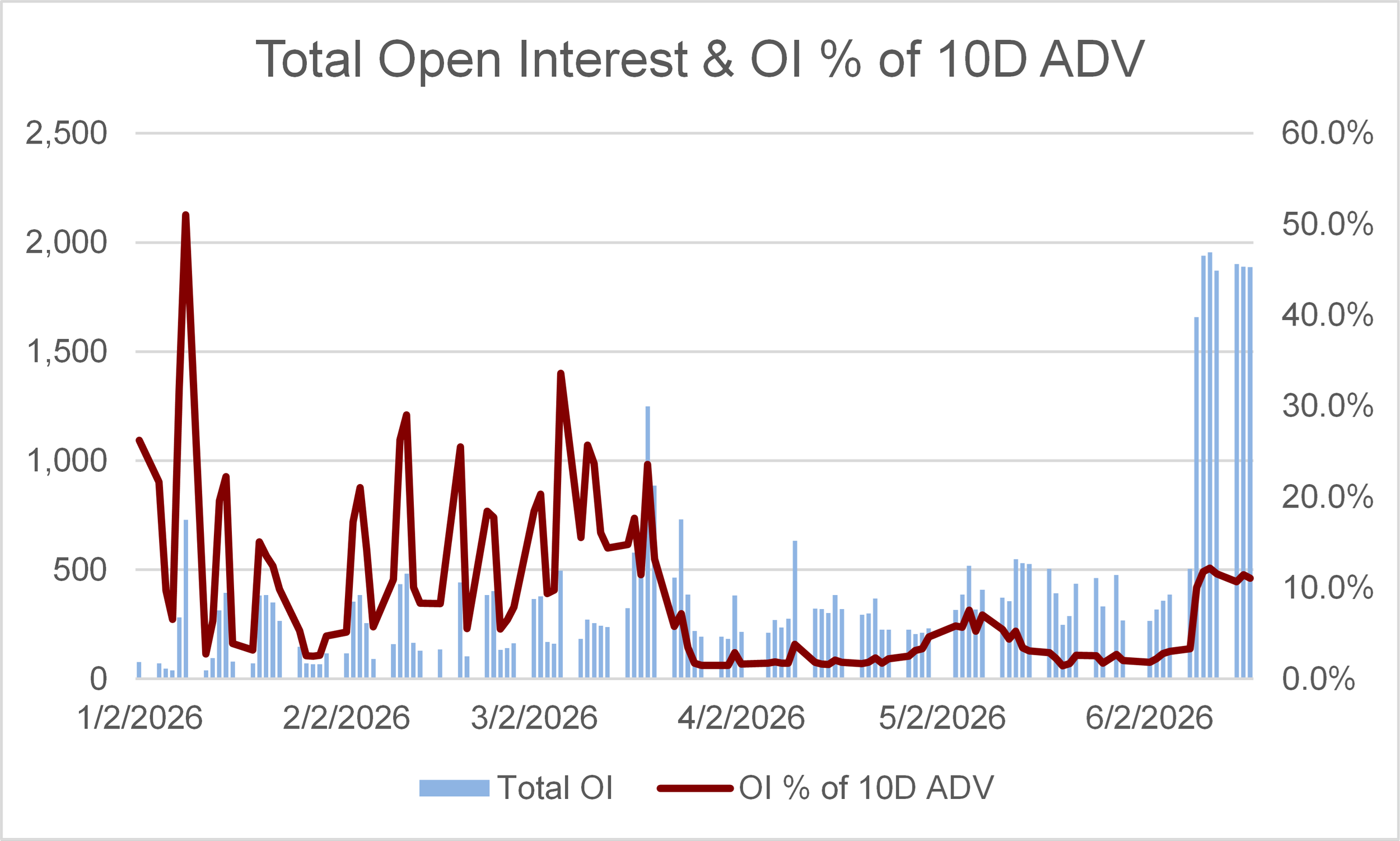
Open interest has been effectively nonexistent from the start, even as volumes have ramped. Even June’s much-celebrated “spike” brings OI to just ~10% of 10-day average volume, versus a 200-400% range at FMX. CME’s (scaled) gold futures complex also sports OI/volume in the ~300% range. Most of Abaxx’s volume, in other words, is day-traded, and OI is sub-scale regardless of whether it’s compared to another startup exchange (FMX) or a scaled competitor (CME).

Source: Upslope chart and analysis based on Abaxx website data

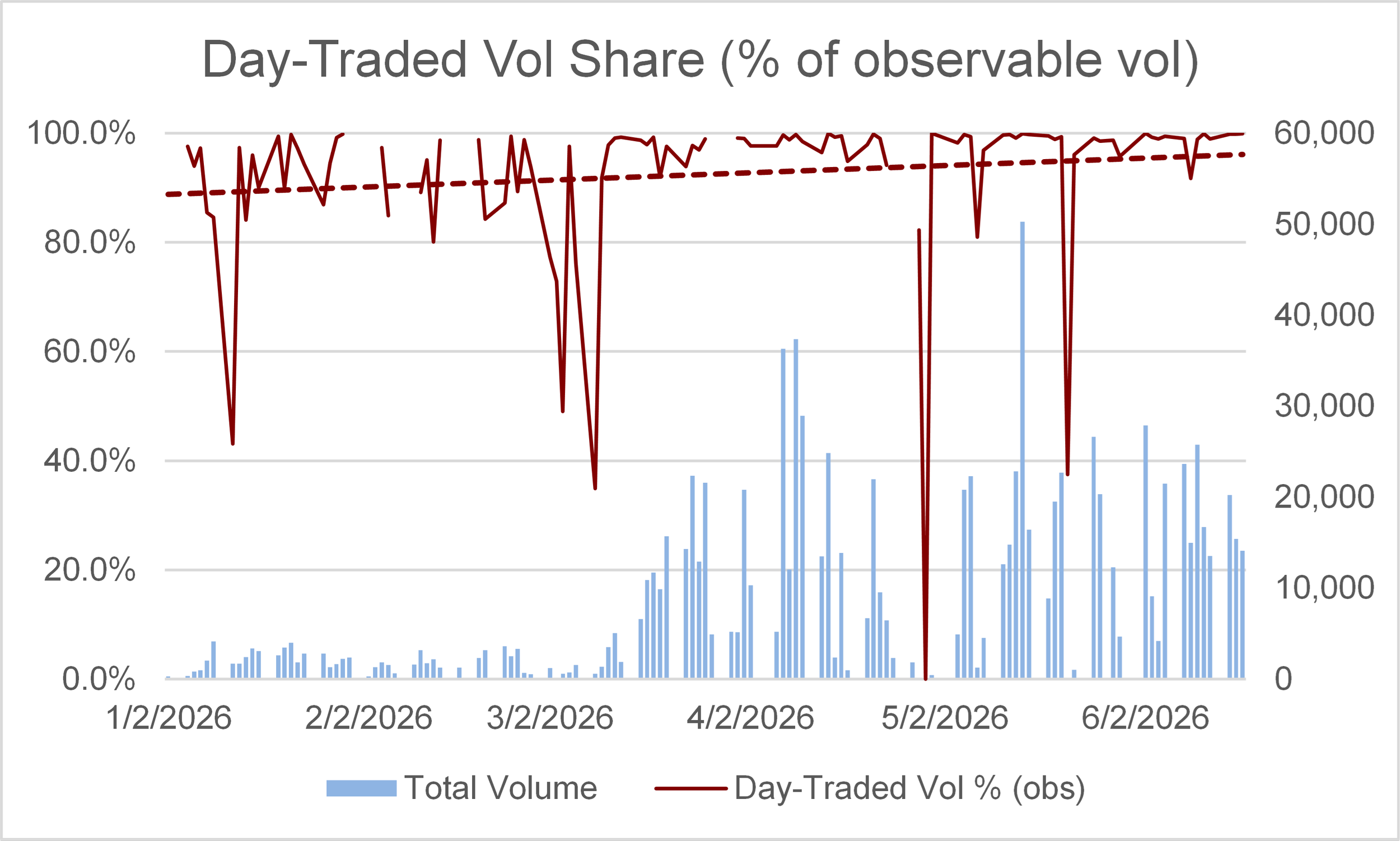
A related approach: I calculated a figure that aims to represent the portion of daily volume from “day-trading” vs. volume that actually generated a change (up or down) in OI. To do this, I compared, on a contract-by-contract basis, daily gross changes in OI to volume. The inverse of this figure gives you “day-traded share” of volume – an imperfect, but I think directionally correct figure (certainly aligns with relative OI trends). No surprise, but on most days nearly 100% of Abaxx volume is “day-traded.” This figure has not improved despite rising headline volumes.

Source: Upslope chart and analysis based on Abaxx website data

Note: Down-spikes generally occurred on abnormally low volume days (~2k lots on average). “Obs” = observable, as there are some data issues that make a sub-segment of data unobservable for this exercise.

“Settle-out share”

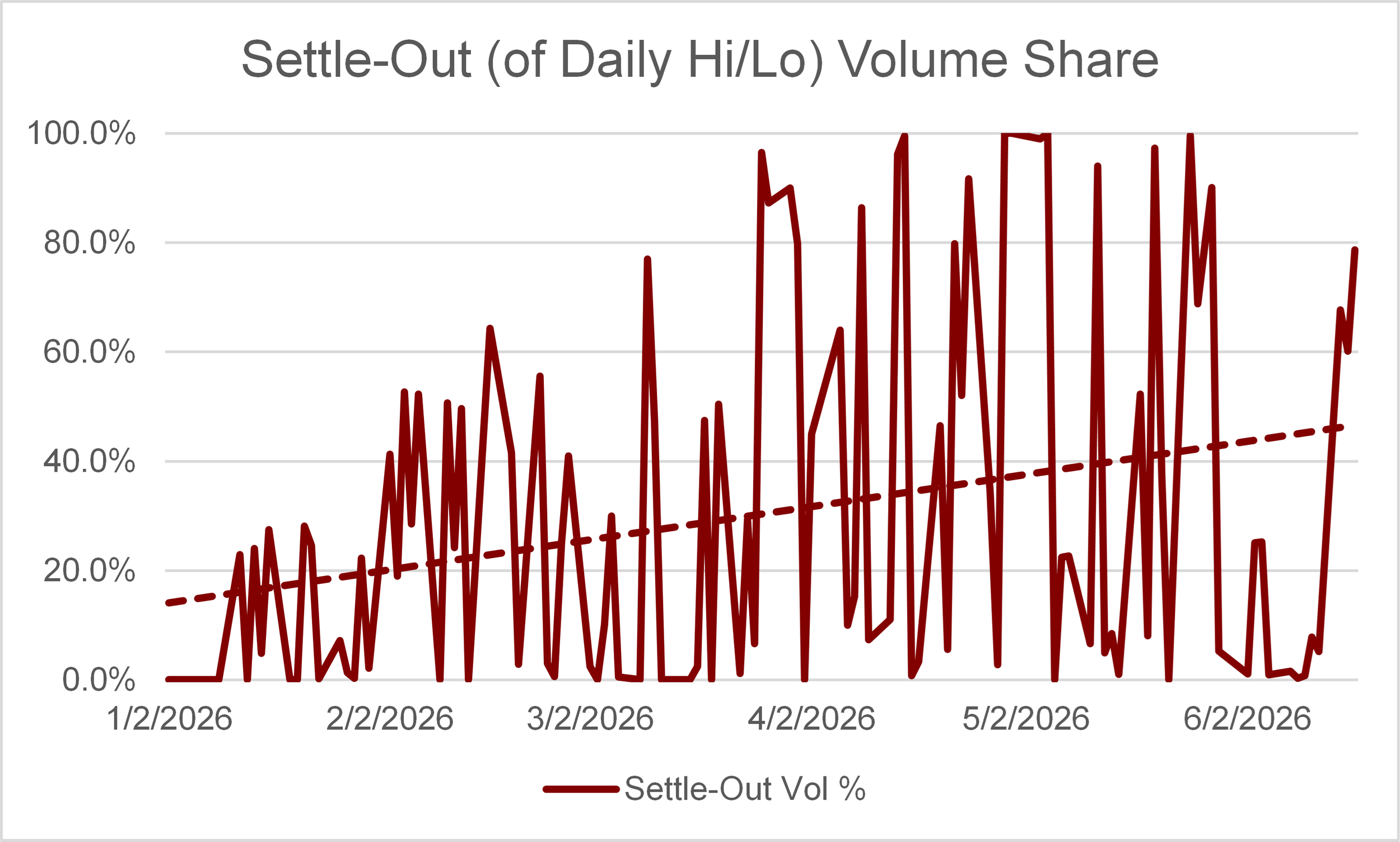
In my opinion, this is the most intriguing figure. On many days, a very large share of total volume (nearly 100% isn’t that unusual) trades in contracts that settled outside their daily on-exchange range. This would be as if Abaxx’s US/OTC shares traded all day between $30-32, and then got marked at $33 at the close. This quirk isn’t unusual in, for example, thinly traded outer-month futures contracts. But again, at Abaxx this isn’t confined to thinly traded contracts; it often occurs in those contributing a substantial portion of volumes.

Such a large and rising portion of Abaxx volumes exhibiting this “settle-out” characteristic is notable and, in my view, not a sign of a healthy, functioning market – let alone one progressing toward establishing multiple global benchmarks. This figure has also not improved despite rising headline volumes.

Source: Upslope chart and analysis based on Abaxx website data

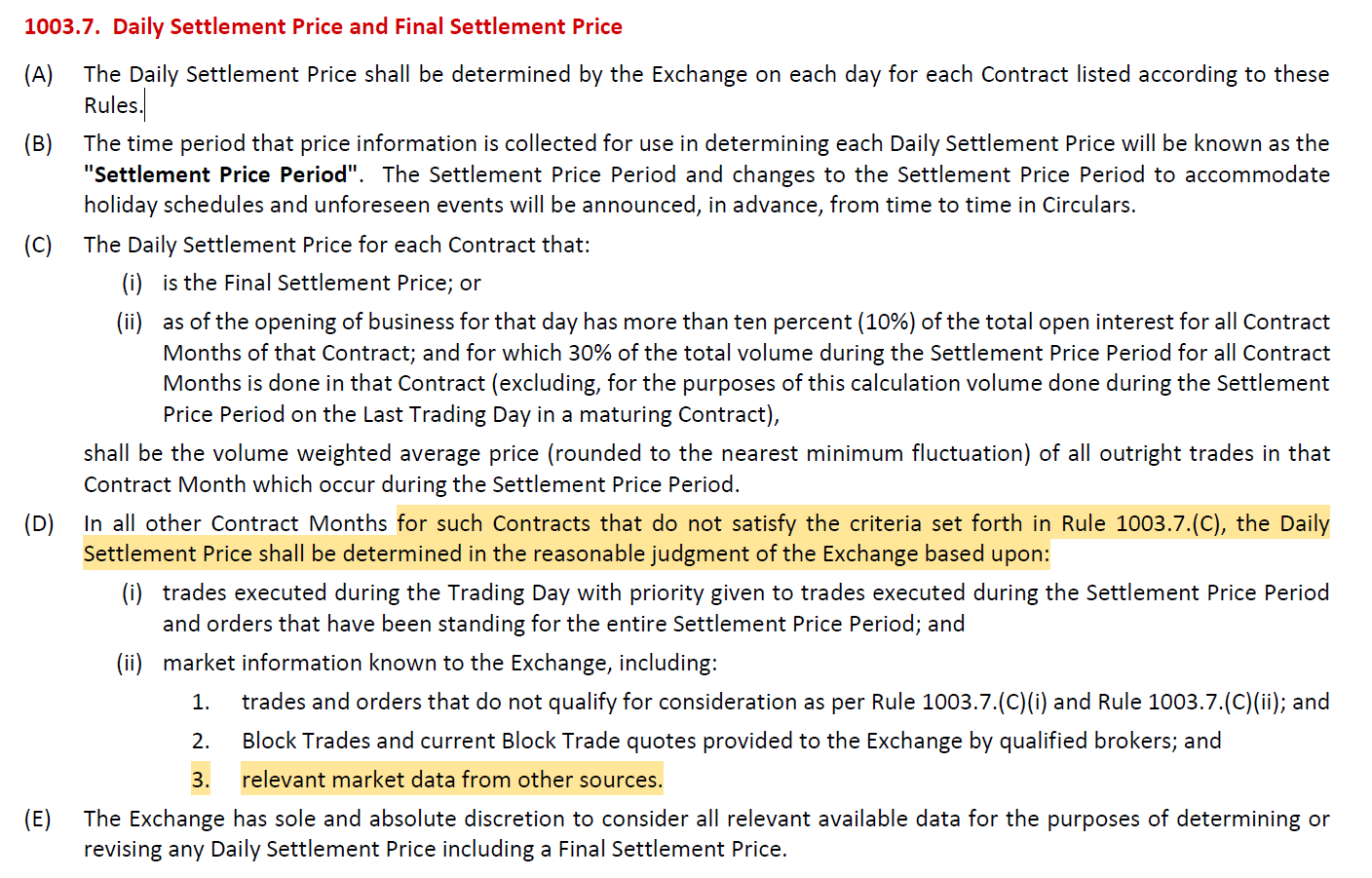
As an example of one way these “outside” settlement marks can be derived, see the below screengrab from Abaxx’s LNG contract documentation. A question I would ask management: what portion of contracts marked outside of their daily trading range have been done so using “relevant market data from other sources”?

Source: Upslope, Abaxx website

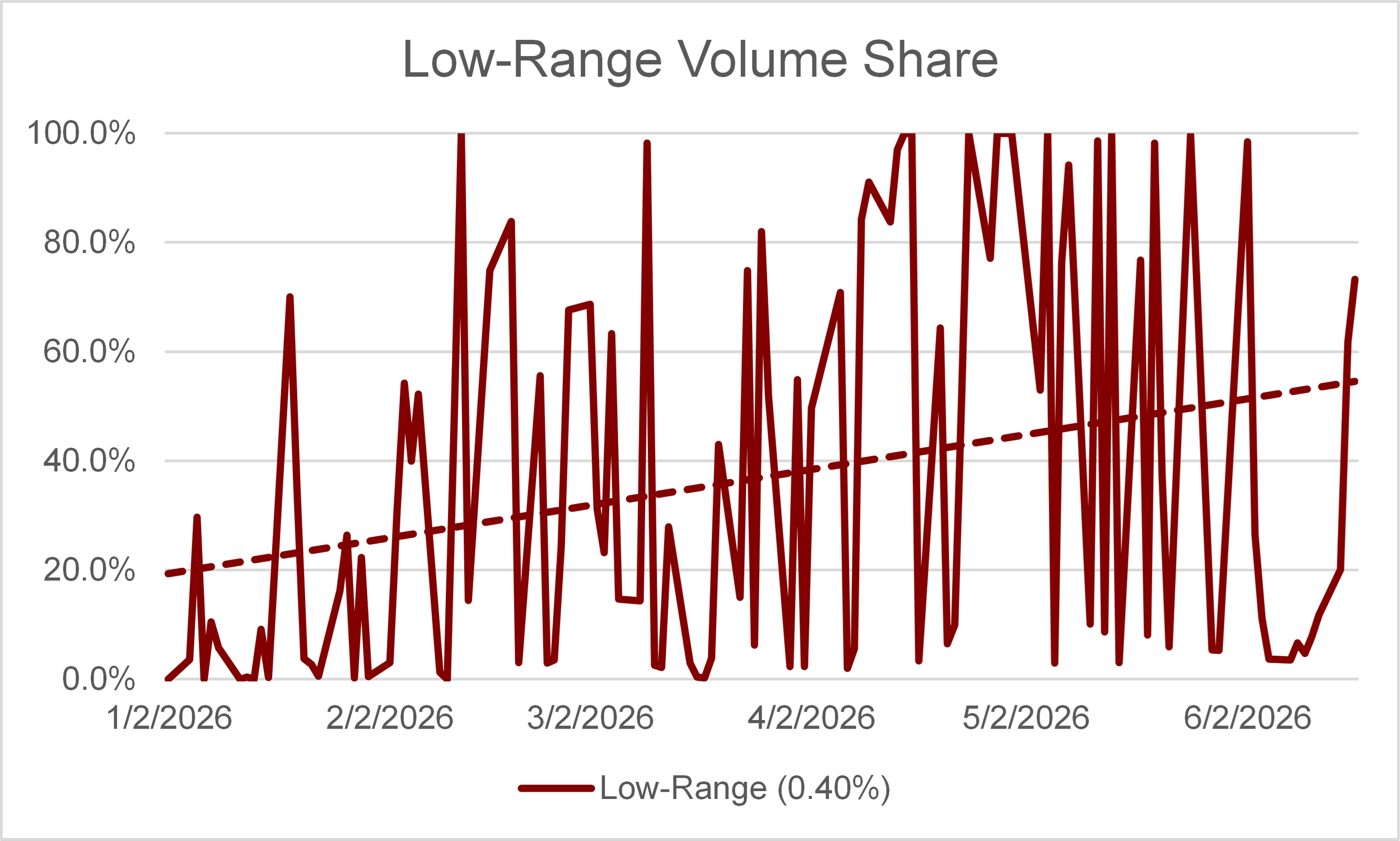
“Low-range share”

Lastly, I also analyzed the high/low price ranges for Abaxx's contracts over time. While it's not that unusual for an Abaxx contract to see a single daily price (i.e. high and low prices for a day are one and the same), I believe that considering abnormally low daily trading ranges more fully captures the essence of an exchange with poor, potentially incentive-driven liquidity.

I used a 0.40% intraday price range as the definition of “low-range.” This is roughly the 5th percentile for GLD (gold represents most of Abaxx's historic volume) over the past five years. A more typical intra-day range for GLD is almost 100 bps. Other commodities Abaxx offers (e.g. silver, nat gas) tend to be even more volatile, making 40 bps a conservative threshold. As shown below, much of Abaxx's volume often occurs in contracts with abnormally low intra-day price ranges (<40 bps). Frankly, I am unsure of the driver of this unusually low intra-day volatility. Regardless, the publicly available data seems odd to me, and again we have another liquidity figure that has not improved despite rising headline volumes.

Source: Upslope chart and analysis based on Abaxx website data

“Liquidity quality” composite

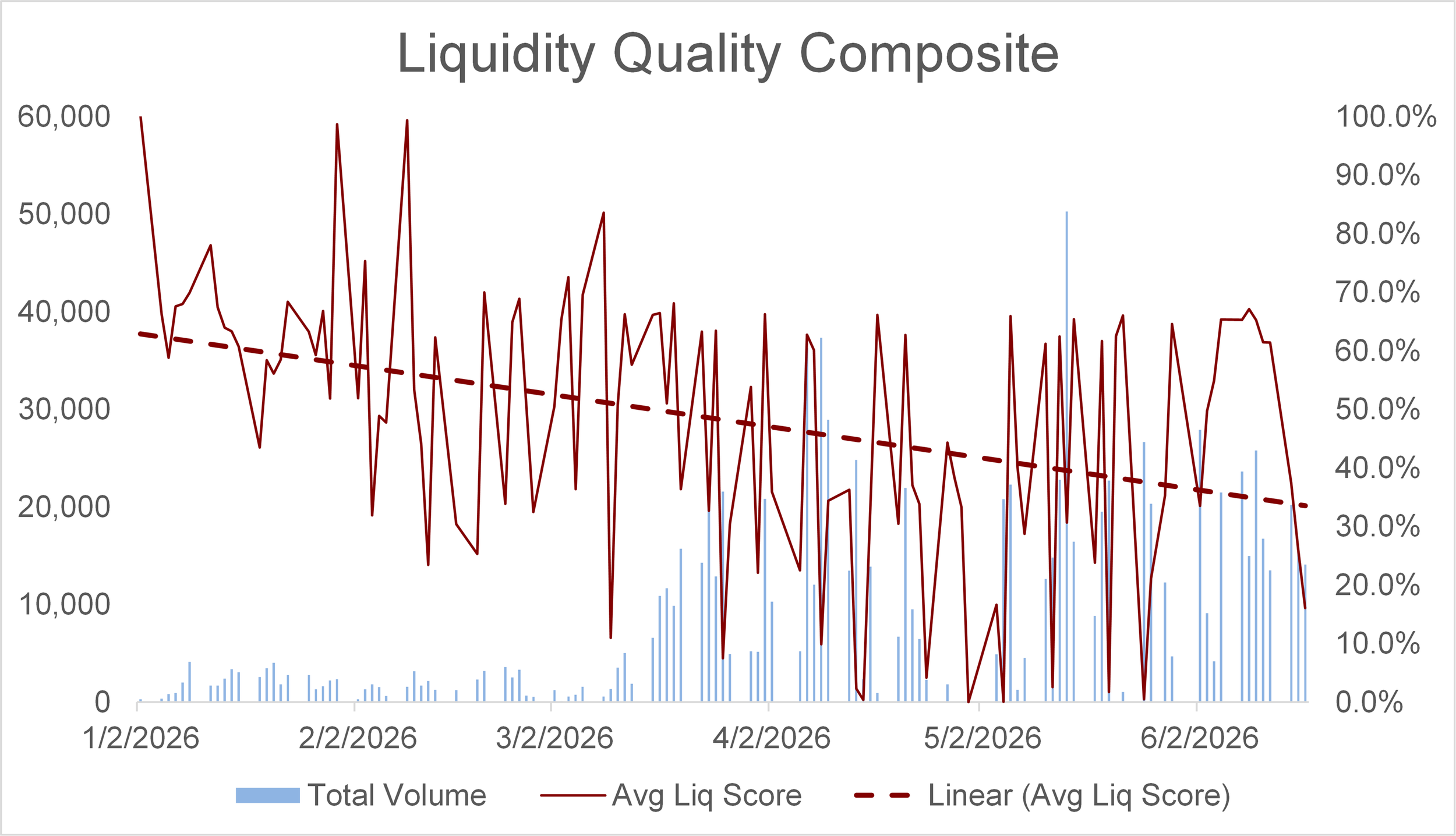
Bringing it all together, I combined the three related metrics – Day-Traded, Settle-Out, and Low-Range shares – into a “Liquidity Quality” composite (= 1 − simple average of three scores).

The theory is that if rising volumes should naturally bring better liquidity and genuine price discovery, this Liquidity Quality Composite should rise with volumes. But, no surprise at this point: “Liquidity Quality” has done the opposite at Abaxx. This suggests, in my view, that incremental volume is “lower quality,” potentially due to increasing reliance on trader incentives.

Source: Upslope chart and analysis based on Abaxx website data

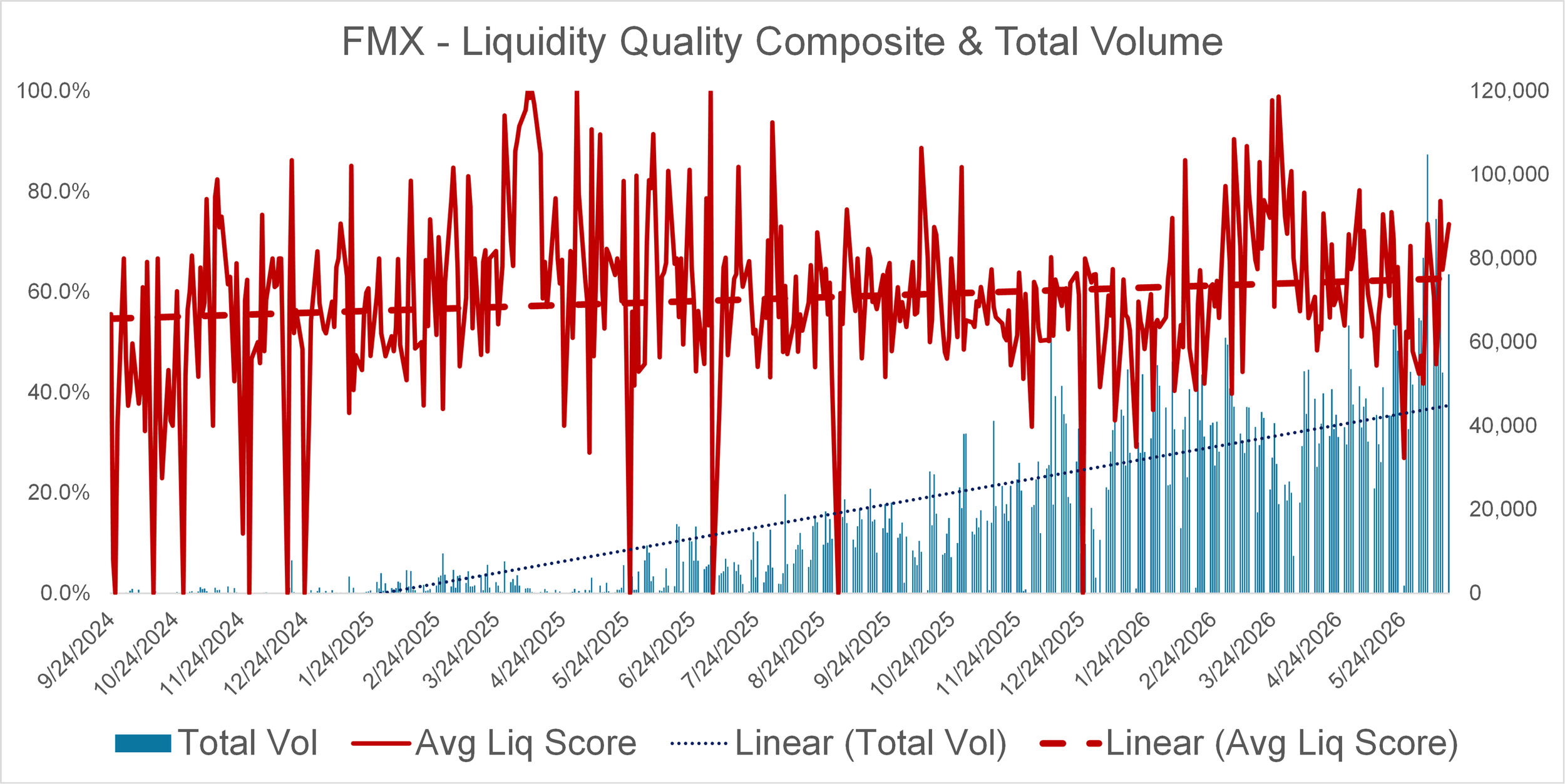
As a sanity check, note that FMX’s “Liquidity Quality” composite rose over time with volumes, as one would expect. While Day-Traded Share ticked up (not good) it stayed far below Abaxx’s (~40% vs. ~99%) — and both Low-Range and Settle-Out shares improved.

Source: Upslope chart and analysis based on FMX website data

Note: data range = 9/24/24 - 6/15/26

Two days

Given the above context, I think it’s useful to look more deeply at a couple of the more unusual trading days.

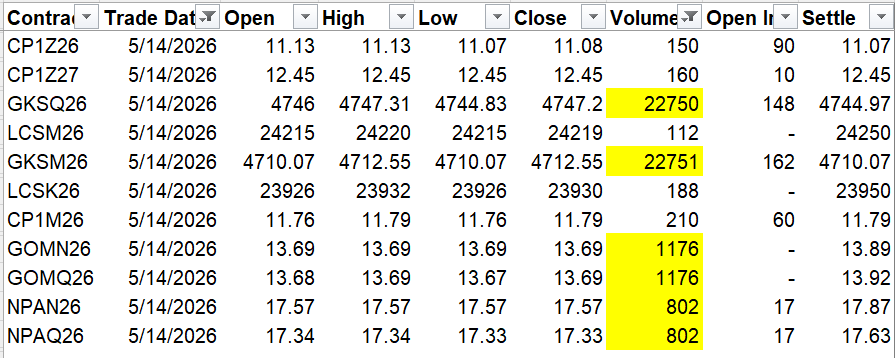
May 14, 2026 was Abaxx’s highest volume day ever, by far. On that day, 90% of volume was concentrated in two related contracts (likely calendar spread) that barely moved in price (~5 bps). Almost 100% of daily volume was seemingly “day-traded.” The estimated cost to traders (Abaxx revenue) to engage in this activity was $157k (per Abaxx Exchange Tracker). Abaxx formally announced its up-listing to TSX the prior day.

Source: Upslope, Abaxx website

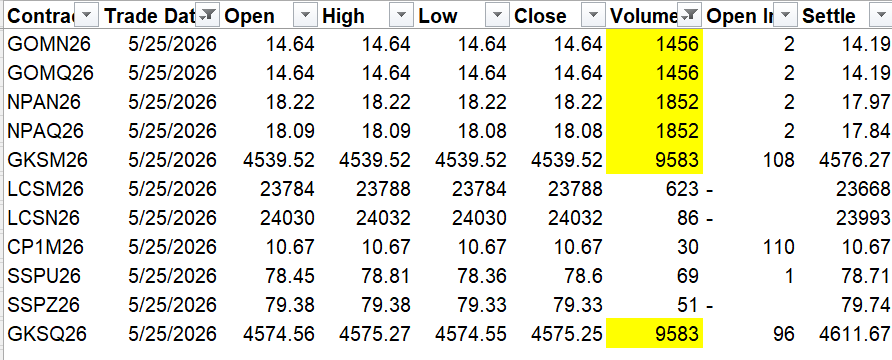
May 25, 2026 was Abaxx’s 6th-best volume day ever and 4th-worst Liquidity Quality day ever, with Settle-Out, Day-Traded, and Low-Range shares all approaching 100%. The estimated cost to traders (Abaxx revenue) to engage in this activity was $121k (per Abaxx Exchange Tracker). Abaxx announced an equity raise the next day.

Source: Upslope, Abaxx website

Conclusion

Given all of the above, I see few signs of real ‘commercial’ traction on Abaxx’s exchange. Incentivizing volume growth is understandable, acceptable, and legal. But it is not value creating on its own (indeed, it must be funded). Actual value creation occurs if and when the exchange sees meaningful growth in independent, un-incentivized volumes and open interest. Without it, there is little fundamental value to this or any upstart exchange, in my view.

There may be legitimate explanations for why the data above paints the less-than-rosy picture that it does, though I am skeptical – especially given management’s commentary on their June 18 investor call, in which they said:

“Tell us about the quality of your trading. That's a bullsh*t metric. That's not a thing.” (Source: preliminary transcript via FactSet)

In my view, it’s ‘not a thing’ precisely because the liquidity quality data and trends look terrible today.

Finally, it’s possible that the data may change for the better in the future and Abaxx could prove to be a success. Unfortunately, the base rate for challenger exchanges succeeding is very low. And this is precisely why established exchanges – with genuine network effects – trade at a premium.


Disclaimer: as of this writing Upslope and its clients are short shares of Abaxx Technologies and stand to benefit if the share price declines. Upslope and its clients are also long shares of competing exchanges, including CME Group and MarketAxess. While Upslope has no present plans to do so, these positions may change at any time, without notice, and Upslope is under no obligation to update this post. Nothing here is investment advice or a recommendation to buy or sell any security. The analysis reflects Upslope’s opinions and is based on data believed to be reliable, but accuracy and completeness are not guaranteed. Do your own work.

The Problem with China

The Problem with China

I have long been fascinated by Russia. I studied the language and history in high school and college and have visited the country many times. As recently as 2020, I told my wife I hoped we could visit Russia with our children someday soon. I really want(ed) to get back to St. Petersburg.

None of this makes me anything close to an expert on China. But I believe it has provided some essential perspective on the speed and violence with which things can change in emerging markets. I went from being earnestly (naively?) hopeful that maybe, possibly Russia could turn things around to sickening disappointment in a very short period.

I have written (okay, Tweeted) a lot about China over the past year. I think about it constantly because I think its path impacts much of the world, as well as all global and many domestic businesses. Despite macro and geopolitical headwinds, investors continue trying to bottom-tick Chinese stocks. I am sympathetic to the logic: sentiment is truly horrendous, valuations are cheap, and aggressive stimulus measures have historically been the norm (and is there anything more certain in life than stocks booming on aggressive stimulus?). Ironically, I think these knife-catchers gain intellectual comfort from the Taiwan debate. Mainstream talk of a doomsday scenario – which everyone knows is very remote – is just another sign that sentiment must be bottomed out. Betting against a Taiwan invasion feels bold, but completely rational.

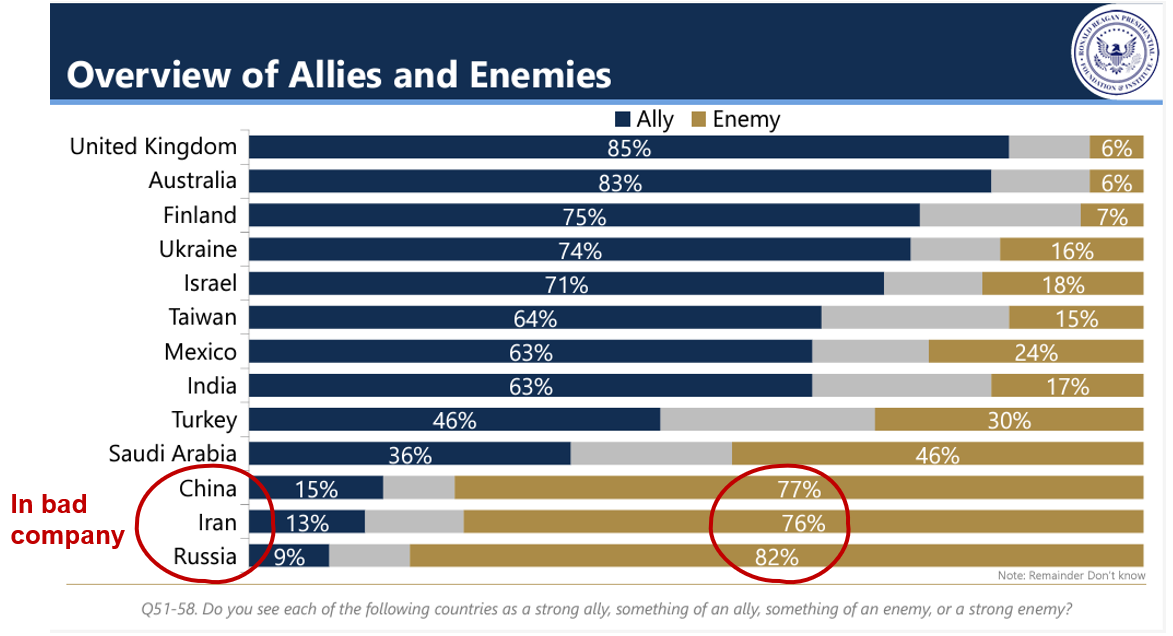
The problem though, isn’t the specific Taiwan risk but what’s driving it. This partly explains the inconsistency of Taiwan Semiconductor (and Apple) shares sitting a stone’s throw from all-time highs, while major Chinese equity indexes sit at multi-decade lows. If growth prospects were solid, would investors be eager to gain exposure to Russian or – pause for laughter – Iranian stocks today? Why not? China has not-so-slowly moved in this direction – cozying up with…Russia, Iran and other sworn enemies of the United States in words and actions. Military harassment of U.S. allies happens regularly. This isn’t some Zerohedge conspiracy theory. On a bipartisan basis, Americans view China as a clear “enemy” of the United States that represents the country’s “greatest nation-state threat” (see charts below). Political and military leaders agree.

“You want it to be one way. But it’s the other way.” – The Wire

Wall Street is the laggard – still mostly viewing China as investable (if out of favor) and analyzing it through the traditional lens of valuation, sentiment, and macroeconomics. But something is missing – and it’s as foundational as it is blindingly obvious. China has rapidly become un-investable for moral (not really the correct word, but you know what I mean) reasons. Quite simply: we don’t invest in stocks of countries actively trying to harm us. It feels uncomfortably judgmental and unscientific to seriously consider this in an investment analysis. But, work through the logic and you’ll see it quickly ties back to fundamentals: over time, companies operating in such countries will almost certainly face unpredictable and serious blowback.

Given the events of the past 5+ years, this isn’t hard to imagine. While Russia represents a worst-case scenario, China itself has already faced plenty of (growing) consequences. In my view, investors would be well-served to quickly become far more judgmental when it comes to investing in companies based in countries that are undemocratic adversaries of the United States.

Finally, what might it take for Chinese equities to reach a sustainable (as opposed to tradable) bottom? I think the answer is obvious: a sustained reversion of the polling data shown in the charts below (note: I selected this particular poll for convenience, but I believe it is fairly consistent with many others). It’s really hard to know what the catalyst could be, but I think investors should be clear that this is the bet they’re making today. I hope it’s a good bet.

Source: Ronald Reagan Presidential Foundation & Institute - 2023 National Defense Survey

Note: red annotations = mine

Source: Ronald Reagan Presidential Foundation & Institute - 2023 National Defense Survey

Note: red annotations = mine

Source: Ronald Reagan Presidential Foundation & Institute - 2023 National Defense Survey

Note: red annotations = mine

Death of a Permabear

Death of a Permabear

Perma-bears can meet their demise in one of two ways: slow starvation (sticking to a bearish bias over decades and slowly, but surely getting left behind), and self-immolation (holding dearly to bearish positioning during a major run-up and finally flipping bullish at precisely the wrong time).

*****

I’ve been trying to write a follow-up post to the one I wrote in January 2022 for six months now. It’s been a struggle. Seth Klarman recently noted “this is one of the weirdest environments in the 40 years I’ve been in the investment business.” I agree, even if I haven’t been around quite as long.

Eighteen months ago, the possible routes ahead seemed clear: speculative growth may soon be gone and dead “forever” (until the next bubble) or value investors would be forced into retirement. As the tide went out in 2022, speculative growth types got obliterated. Despite this revealing episode, most not only survived, but have been given second chances[1]. Even more amazingly – to me at least – they and their forgiving backers have been redeemed in spades year to date.

While I acknowledge (and try hard to fight) my own cranky tendencies, I can’t help but wonder if celebrations might be premature. A few miscellaneous things have popped up in recent weeks that have my antenna up:

  • Short-sellers are on life support. Via Goldman Sachs (data as of July 19): “[The GS] Most Short basket 2-month relative returns to SPX is 23% today, which is the 4th highest return spread since 1-Jan-2010 (looking at 2m returns daily), and ranks in the 99th percentile” (emphasis mine).

  • Longs are full risk-on. Via Man Group: “the drawdown in the MSCI World [Minimum Volatility] Index (relative to the standard index) has reached an extreme level that is only comparable to the DotCom tech bubble and the post-Covid market risk rally.”

  • The CRE crisis is very real, based on recent discussions with various industry contacts. Perhaps CRE issues are and will remain well-contained, but the contrast vs. the exuberant “we stuck the (soft) landing” high-fives is very peculiar.

  • The yield curve remains deeply inverted and its signal value is widely mocked at the moment. My view on the yield curve is that much like inflation, its impacts are serious and hard to predict.

What does it all mean? I think it paints a picture of investors eager to move on (and up). I don’t blame them. A clean break from the macro weirdness of the last 18 months would be nice. Historically though, I don’t think that’s how hiking cycles have played out. Like the 2020-2021 SPAC bubble, perhaps the logical outcome will take longer to unfold than expected.

For at least two notorious perma-bears that I track, it’s already been too much[2].

- - George - -

*****

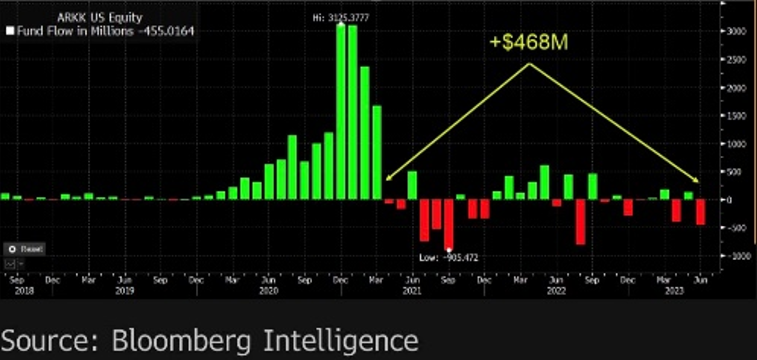
[1] See Ark flagship fund flows below.

[2] One hot off the press, the other I’ll keep to myself - sorry. Addendum: to be fair to Morgan Stanley’s Mike Wilson: (a) recent history aside, I’m not sure he could fairly be described as a “perma-bear.” But, for now he is certainly the face of the bear crowd. (b) he hasn’t fully “capitulated” yet - just rightly acknowledged mistakes to date. For the record, this post wasn’t originally intended to be about him!

Fund flows for Ark Investment’s flagship fund (ARKK). I acknowledge the chart crime-y summary label, but am astonished net flows haven’t been far worse.

In the Year Two Thousand (and 22)

In the Year Two Thousand (and 22)

It’s nasty out there – and I’m not just talking about price action. On social media, self-described growth and value investors have been increasingly at each other’s throats since the turn of the new year. The other day on Twitter a snarky comment about Netflix’s valuation was met with accusations of…Nazi sympathy and being anti-science. Okay. I’ve been thinking a lot about the regime shift we seem to be witnessing and why the vitriol has been so intense of late.

Stepping back, the last 13+ months have been some of the most fascinating and emotionally volatile (market-wise) I’ve experienced. I’m sure plenty of plot twists lie ahead, but sitting here today it’s awfully hard not to feel like we just witnessed and are now coming out the other side of a compressed version of the 90s tech bubble. I won’t bore you with the long list of parallels, but that’s the backdrop.

While 2021 began with unprecedented pain and existential threats to short-sellers from the meme stock movement, it wasn’t just meme stocks and it certainly wasn’t just retail inflating the “speculative growth”[1] bubble. The last three weeks have seen the script flipped on its head. To make money now, own cheap stocks and short expensive ones. There’s not much nuance. The functional definitions of “cheap” and “expensive” are as simplistic as ever: big multiple (especially on sales) bad, low multiple (especially on free cash flow) good.

Looking ahead, there are two obvious paths. The first sees markets (speculative growth shares in particular) return to all-time highs and quickly. I’m thinking a few months – not a year or something that rounds up to a year. The second…does not. Down that path we’d see a continued grinding down and collapse of speculative growth stocks (serious bear market rallies mixed in, of course). But ultimately, speculative growth stocks don’t come all that close to prior all-time highs for years to come.

What I find interesting isn’t what the paths are (they’re obvious), but how explosive the outcome is likely to be. Each path involves a form of intellectual torture of a major group of market participants. Resolving that torture is what will accelerate the outcome.

If we quickly revert back to all-time highs (again, focused on speculative growth stocks), value investors that have been tormented consistently with underperformance since the end of the financial crisis (a casual 13 years ago) will be despondent. For about a month, this group has finally begun to get comfortable that their time has truly, finally come. They were right and the sacrifices were all worth it. You cannot take that away from them. But if you do! – expect the reaction in markets to be dramatic. It's not hard to see all but the most hardcore value investors throw in the towel en masse if we quickly see markets rotate hard back to speculative growth. This could accelerate us well past prior highs.

On the other hand, if we take the second path and speculative growth continues to grind lower, growth investors will be faced with a painful choice: continue holding, buying dips, and losing ever more money, or give up and sell to preserve capital. The former is increasingly scary, given the magnitude of the moves we’ve already seen (i.e. plenty of stocks already cut in half). The latter is incredibly difficult for emotional and intellectual reasons. Selling stocks whose fundamentals seemingly continue to be strong is a tacit acknowledgement that the valuation was just too damn high. Liquidating will bring up serious thoughts of self-doubt about the durability of the speculative growth style that had been so unbelievably successful. How would LPs react to former star growth managers acknowledging this?

Given the mental torture involved in making that decision and the fact so many growth investors have built identities entirely around growth above-all-else and decade-plus time horizons and valuation-as-a-tool-of-Boomers, I think most speculative growth investors are still holding out. It’s anecdotal (and prime broker data is varied[2]), but I mostly see speculative growth types sitting tight (or claiming to), carefully buying dips, ogling watchlists, trying to right past wrongs/errors of omission, and pounding the table on fundamentals.

From the perspective of a value investor (mostly), speculative growth stocks still look awfully expensive. Shopify, for example, has been cut in half and still somehow trades for almost 20x sales (130x EBITDA)! You can argue about fundamentals and that it’s the greatest business the world has ever seen – but that’s not what matters today and possibly for the foreseeable future.

I don’t know which path the market will take (bias is lower, but I just don’t know). But I think the nastiness we’ve seen of late is directly related to the painful, internal debate for growth investors (combined with value investors finally allowing themselves to smile and poke their growth counterparts). We’ll know in the months ahead that one side was very, very wrong. And it is that painful acknowledgement that should accelerate the move in whatever direction the market takes.

That's all for now.

-- George --

[1] My definition of “speculative growth” is mostly “know it when you see it.” If a stock trades for 20x sales, it is speculative growth (not judging!). If a stock has virtually no sales and a multi-billion dollar valuation based on fluff, it is speculative growth (I am kind of judging).

[2] Exposure to growth has clearly pulled back, but the extent depends on how long a time horizon one is considering (and changes to index composition over the past two decades).

When Stocks Moon

When Stocks Moon

It’s finally acceptable to use the B-word in public without getting dirty looks. In recent weeks, it’s become obvious a bubble now exists in equity markets. Not a broad-based one, but a significant bubble nonetheless.

Where is it? The most obvious pocket is in EV (electric vehicle)-related SPACs (blank check companies that, historically, have had a tendency to acquire third-rate businesses at inflated prices. Today, investors have the opportunity to purchase shares in these at significant premiums to those inflated prices). This is speculation-squared and it’s one of the most intense frenzies I’ve observed in my career. While EV SPACs are the poster-child, froth is also apparent among SPACs more broadly, as well as certain pockets of Tech, and trendy (e.g. plant-based) food.

You may wonder how significant EV SPACs could really be. By my calculation, there are at least 15 such companies currently trading for a combined, pro-forma enterprise value of over $95 billion. What kind of sales are these 15 companies expected to generate in 2020? Not quite $400 million (that’s an almost 250x sales multiple. Of course, combined earnings are quite negative). A number of EV SPACs have close to zero sales expected for 2020 and are publicly projecting billions in sales within five or so years. Easy!

Two other related observations of events from last week — suggesting to me we are in the later innings of the craziness:

  1. ARKK, one of the most aggressive/speculative ETFs (with heavy EV exposure via Tesla) set both trading volume and inflow records (graphics at the end of this post), and 

  2. Beginning last Thursday (Dec 10) evening, there was an incredible ~12-hour bonanza during which five SPAC IPOs priced (a record) and four existing SPACs announced EV acquisitions (has to be a record). 

If I could sum it all up with a unifying theme: there is a pervasive sense that legitimately "easy money" can be made today — in SPACs, EV stocks, call options, etc. “Do you like accounting or making money?” one social media-famous speculator recently quipped.

Now that the horse has been beaten, how does one prepare for and navigate this environment? For years I have contemplated the best course of action should such an environment re-emerge. The prospect of managing a long/short strategy through a period similar to 1999 scared me. Today’s froth is far more targeted, but I think similar lessons and conclusions apply:

  • A higher cash allocation may very well be preferable to elevated short exposure

  • “Do nothing” with regards to existing longs is the default more than ever

  • Modest gross exposure is generally better

  • Be extremely careful shorting “bubble” stocks

  • General bias towards “Tactical”/traditional value stocks on the long side

Upslope’s portfolio has been adjusted mostly according to the above in recent weeks (lower gross, eliminating lower conviction shorts, patience with and bias towards Tactical longs) — with one notable exception. There is a theoretical but important difference between today and 1999. I’m not alone in observing that market regimes in recent years have been unusually short and violent (flash ‘bear’ markets in Dec 2018 + Mar 2020 and the Bitcoin/blockchain-mania of late 2017 are obvious examples, among others). The EV and general SPAC craze has certainly been fast and violent thus far (thinking of the past few months). In my view, it would hardly be shocking to see the current, more isolated bubble be much shorter-lived than the period surrounding '99. I realize this fits nicely with my generally skeptical and often-cranky-about-growth-stocks priors, and am keeping an open mind. But, if the observation is correct, it means the best opportunities on the short side are already here.

What does this mean in terms of our “framework” above? It means we are indeed taking shots at EV and other SPACs (mostly non-EV as of today) on the short side. Sizing is extremely small (each about ~1/4 the size of our usual shorts), but we have a lot of them. Quite a few look like dreaded “valuation shorts.” However, my view is that they are also likely to be lousy, commoditized, and in some cases fraudy businesses. I tend to care about hard catalysts less than most short-sellers and am comfortable sitting on shorts of third-rate businesses with flawed financial models for longer periods of time. This ‘basket’ of shorts is consistent with such an approach. Nonetheless, this is by no means a holy war and I will have no shame cutting and running (as always). There is no shortage of casualties/war stories from the late 90s.

That's it for now.

-- George --

ARKK Flows and Volume [Bottom Panels]

Source: @cfromhertzhttps://twitter.com/cfromhertz/status/1337380138942668800?s=20

Source: @cfromhertz

https://twitter.com/cfromhertz/status/1337380138942668800?s=20

ARKK Top 10 Holdings

Source: ark-funds.com

Source: ark-funds.com